Nov 29, 2024
Transfer Learning for Ultrasound-Based Kidney Stone (Urolithiasis) Detection with Augmented Regularization and Saliency Maps
Medical Imaging
Published in RAAICON 2024, IEEE Conference,DOI:10.1109/RAAICON64172.2024.10928447, Link
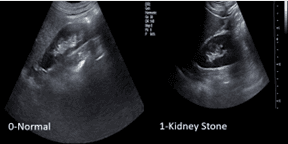
Abstract: Urolithiasis, commonly known as kidney stones (KS), can have serious health implications. In 2019, around 115 million people around the world suffered from this disease. It is extremely important that the disease be diagnosed quickly. Among all the possible diagnostic imaging options, ultrasound is the safest option, as it has no risk of radiation. The goal of this study is to create a system that will detect kidney stones from ultrasound images. The dataset used in this research had 2 classes: normal (4414) and kidney stone (5002), in total 9416 images. The dataset was preprocessed applying proper methods such as resizing, rescaling, and center cropping and then split into train, validation, and test sets. We deployed four pretrained deep learning models, which are DenseNet201, ResNet50, InceptionV3, and MobileNetV3. Methods like MixUp and CutMix, known as augmented regularization, were used to make the model more robust. Hyperparameter tuning was done for optimal results. The layers of the pretrained model were frozen, and on top of them our CNN model was placed. The research was conducted using two methods: one where pretrained models were only used for feature extraction and another where pretrained models were fine-tuned for training. The highest accuracy of 99.73% was achieved by DenseNet. The model’s output prediction has been explained by using saliency maps. After 1000 iterations, the 99% confidence interval for the model is [0.993,0.999]